Monday, November 18, 2019

Bio Gas Energy

Biogas is a type of biofuel that is naturally produced from the decomposition of organic waste. When organic matter, such as food scraps and animal waste, break down in an anaerobic environment (an environment absent of oxygen) they release a blend of gases, primarily methane and carbon dioxide.  Because this decomposition happens in an anaerobic environment, the process of producing bio gas is also known as anaerobic digestion.

Anaerobic digestion is a natural form of waste-to-energy that uses the process of fermentation to breakdown organic matter. Animal manure, food scraps, wastewater, and sewage are all examples of organic matter that can produce biogas by anaerobic digestion. Due to the high content of methane in biogas (typically 50-75%) biogas is flammable, and therefore produces a deep blue flame, and can be used as an energy source.

The Ecology of Biogas

Biogas is known as an environmentally-friendly energy source because it alleviates two major environmental problems simultaneously:
  1. The global waste epidemic that releases dangerous levels of methane gas every day
  2. The reliance on fossil fuel energy to meet global energy demand
By converting organic waste into energy, biogas is utilizing nature’s elegant tendency to recycle substances into productive resources. Biogas generation recovers waste materials that would otherwise pollute landfills; prevents the use of toxic chemicals in sewage treatment plants, and saves money, energy, and material by treating waste on-site. Moreover, biogas usage does not require fossil fuel extraction to produce energy. 

Instead, biogas takes a problematic gas, and converts it into a much safer form. More specifically, the methane content present in decomposing waste is converted into carbon dioxide. Methane gas has approximately 20 to 30 times the heat-trapping capabilities of carbon dioxide. This means that when a rotting loaf of bread converts into biogas, the loaf’s environmental impact will be about 10 times less potent than if it was left to rot in a landfill.

Biogas Digesters

As opposed to letting methane gas release to the atmosphere, biogas digesters are the systems that process waste into biogas, and then channel that biogas so that the energy can be productively used.  There are several types of biogas systems and plants that have been designed to make efficient use of biogas. While each model differs depending on input, output, size, and type, the biological process that converts organic waste into biogas is uniform. Biogas digesters receive organic matter, which decompose in a digestion chamber. The digestion chamber is fully submerged in water, making it an anaerobic (oxygen-free) environment.  The anaerobic environment allows for microorganisms to break down the organic material, and convert it into biogas.


All-Natural Fertilizer

Because the organic material decomposes in a liquid environment, nutrients present in the waste dissolve into the water, and create a nutrient-rich sludge, typically used as fertilizer for plants. This fertilizer output is generated on a daily basis, and therefore is a highly productive by-product of anaerobic digestion.  

Biological breakdown

To produce biogas, organic matter ferments with the help of bacterial communities. Four stages of fermentation move the organic material from their initial composition into their biogas state.
  1. The first stage of the digestion process is the hydrolysis stage. In the hydrolysis stage insoluble organic polymers (such as carbohydrates) are broken down, making it accessible to the next stage of bacteria called acidogenic bacteria.
  2. The acideogenic bacteria convert sugars and amino acids into carbon dioxide, hydrogen, ammonia, and organic acids.
  3. At the third stage the acetogenic bacteria convert the organic acids into acetic acid, hydrogen, ammonia, and carbon dioxide, allowing for the final stage- the methanogens.
  4. The methanogens convert these final components into methane and carbon dioxide- which can then be used as a flammable, green energy. 


History of Biogas

This anaerobic process of decomposition (or fermentation) of organic matter happens all around us in nature, and has been happening for a very long time.  In fact, the bacteria that break down organic material into biogas are some of the oldest multi-celled organisms on the planet. Human use of biogas, of course doesn’t go thatfar back, however, some anecdotal evidence traces the first uses of biogas to the Assyrians in the 10th century and the Persians in the 16th century. More recently, the 20th century has brought about a renaissance of both industrial and small-scale biogas systems.
In the 18th century it became clear to Flemish chemist Jan Baptise van Helmont that decomposing organic matter produced a combustible gas.  Soon after, John Dalton and Humphrey Davy clarified that this flammable gas was methane. The first major anaerobic digestion plant dates back to 1859 in Bombay. Not long after, in 1898, the UK used anaerobic digestion to convert sewage into biogas, which was then used to light street lamps.  For the next century, anaerobic digestion was primarily used as a means to treat municipal wastewater. When the price of fossil fuels rose in the 1970’s industrial anaerobic digestion plants increased in popularity and efficiency.


Both India and China began developing small-scale biogas digesters for farmers around the 1960’s. The goal was to decrease energy poverty in rural areas, and make cleaner cooking fuels more accessible in remote areas. Close to one third of the global population still uses firewood and other biomass for energy, causing devastating health and environmental problems. (Link to blog post on developing countries)
In India the popular model is known as the floating drum digester, and China’s preferred biogas model is called the fixed dome digester. 

Since then, family-sized biogas units are gaining more attention and popularity as both a means of reducing household waste and as a means of providing clean renewable energy to families throughout the world. In the past 15 years, countries around the globe are adopting biogas programs to make both household biogas systems and larger anaerobic digestion plants accessible, efficient, and convenient. As landfills get illegally overloaded, and as the release of methane poses more worrying problems, the benefits of using biogas systems to convert waste into energy are increasingly more relevant and important.

Many Uses of Biogas:

Biogas can be produced with various types of organic matter, and therefore there are several types of models for biogas digesters. Some industrial systems are designed to treat: municipal wastewater, industrial wastewater, municipal solid waste, and agricultural waste.
Small-scale systems are typically used for digesting animal waste. And newer family-size systems are designed to digest food waste. The resulting biogas can be used in several ways including: gas, electricity, heat, and transportation fuels.
For example, in Sweden hundreds of cars and buses run on refined biogas. The biogas in Sweden is produced primarily from sewage treatment plants and landfills. 

Another example of the diversified uses of biogas is the First Milk plant. One of the UK’s biggest cheese makers is building an anaerobic digestion plant that will process dairy residues and convert into bio-methane for the gas grid. New anaerobic digestion plants like these with fascinating stories keep popping up every day!

Small-Scale Biogas Systems

Small-scale, or family-size biogas digesters are most frequently found in India and China. However, the demand for such units is growing rapidly throughout the world thanks to more advanced and convenient technologies, such as HomeBiogas. As the modern world is producing more and more waste, individuals are eager to find ecologic ways to treat their trash. 
Traditional systems typically found in India and China focus on animal waste. Due to a lack of energy in rural areas combined with a surplus of animal manure, biogas digesters are very popular, useful, and even life-changing. In many developing countries, biogas digesters are even subsidized and advocated by the government and local ministries, who see the variety of benefits produced from using biogas. In addition to having a clean renewable energy provide gas in the kitchen, many families make extensive use of the fertilizer by-product that biogas digesters provide.


In African countries, some biogas users even turn a profit by selling the bio-slurry by-product produced by biogas systems. This bio-slurry is different from the liquid fertilizer that is produced daily. Bio-slurry refers to the most decomposed stage of the organic matter, after it has been broken down in the system. Bio-slurry sinks to the bottom of the biogas system, and with the help of modern units like HomeBiogas, is easily emptied out once accrued (usually an annual process). This bio-slurry is in fact a nutrient-dense sludge that provides lots of benefits to soil, and can increase productivity of vegetable gardens.
Biogas is a technology that mimics nature’s ability to give back. Both industrial-size and family-size biogas units are becoming incredibly popular and relevant in today’s world.  As the application and efficiency grows, biogas can make a significant impact on reducing greenhouse gases. As a clean source of energy and a renewable means of treating organic waste, biogas is applicable both in under-developed and industrialized countries.

Thursday, September 26, 2019

Waste Management

What is Waste Management?

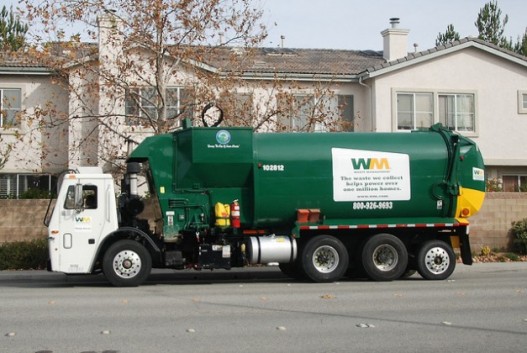
Americans alone are responsible for producing a hopping 220 million tons of waste a year. This number is far more than any other nation in the world. Because of this fact both the government and environmental associations have developed numerous methods of dealing with the problem. Waste management is that solution, a rather complex issue that encompasses more than 20 different industries. Waste management is collection, transportation, and disposal of garbage, sewage and other waste products.
Waste management is the process of treating solid wastes and offers variety of solutions for recycling items that don’t belong to trash. It is about how garbage can be used as a valuable resource. Waste management is something that each and every household and business owner in the world needs. Waste management disposes of the products and substances that you have use in a safe and efficient manner.
According to Wikipedia,
Waste management or Waste disposal is all the activities and actions required to manage waste from its inception to its final disposal. This includes amongst other things, collection, transport, treatment and disposal of waste together with monitoring and regulation. It also encompasses the legal and regulatory framework that relates to waste management encompassing guidance on recycling etc.
You will find there are eight major groups of waste management methods, each of them divided into numerous categories. Those groups include source reduction and reuse, animal feeding, recycling, composting, fermentation, landfills, incineration and land application. You can start using many techniques right at home, like reduction and reuse, which works to reduce the amount of disposable material used.
Waste-Management

Various Methods of Waste Disposal

Although there are many methods available to dispose off waste. Let’s take a look at some of the most commonly used methods that you should know about waste management.

Landfills

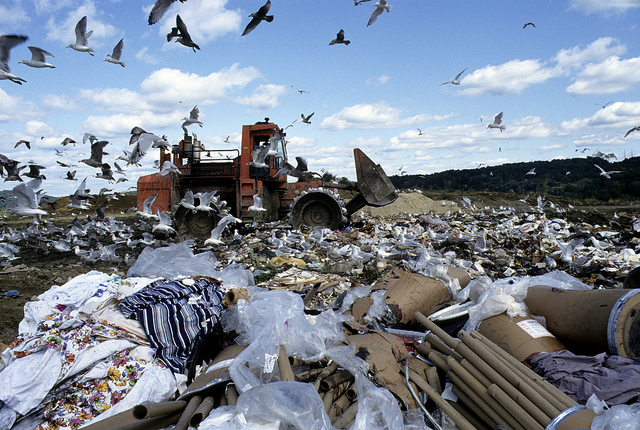
Throwing daily waste/garbage in the landfills is the most popularly used method of waste disposal used today. This process of waste disposal focuses attention on burying the waste in the land. Landfills are commonly found in developing countries. There is a process used that eliminates the odors and dangers of waste before it is placed into the ground. While it is true this is the most popular form of waste disposal, it is certainly far from the only procedure and one that may also bring with it an assortment of space.
This method is becoming less these days although, thanks to the lack of space available and the strong presence of methane and other landfill gases, both of which can cause numerous contamination problems. Landfills give rise to air and water pollution which severely affects the environment and can prove fatal to the lives of humans and animals. Many areas are reconsidering the use of landfills.

Incineration/Combustion

Incineration or combustion is a type disposal method in which municipal solid wastes are burned at high temperatures so as as to convert them into residue and gaseous products. The biggest advantage of this type of method is that it can reduce the volume of solid waste to 20 to 30 percent of the original volume, decreases the space they take up and reduce the stress on landfills.
This process is also known as thermal treatment where solid waste materials are converted by Incinerators into heat, gas, steam and ash. Incineration is something that is very in countries where landfill space is no longer available, which includes Japan.

Recovery and Recycling

Resource recovery is the process of taking useful discarded items for a specific next use. These discarded items are then processed to extract or recover materials and resources or convert them to energy in the form of usable heat, electricity or fuel.
Recycling is the process of converting waste products into new products to prevent energy usage and consumption of fresh raw materials. Recycling is the third component of Reduce, Reuse and Recycle waste hierarchy. The idea behind recycling is to reduce energy usage, reduce volume of landfills, reduce air and water pollution, reduce greenhouse gas emissions and preserve natural resources for future use.

Plasma gasification

Plasma gasification is another form of waste management. Plasma is a primarily an electrically charged or a highly ionized gas. Lighting is one type of plasma which produces temperatures that exceed 12,600 °F . With this method of waste disposal, a vessel uses characteristic plasma torches operating at +10,000 °F which is  creating a gasification zone till 3,000 °F for the conversion of solid or liquid wastes into a syngas.
During the treatment solid waste by plasma gasification, the waste’s molecular bonds are broken down as result of the  intense heat in the vessels and the elemental components. Thanks to this process, destruction of waste and dangerous materials is found. This form of waste disposal provides renewable energy and an assortment of other fantastic benefits.
Landfill in Danbury Connecticut

Composting

Composting is a easy and natural bio-degradation process that takes organic wastes i.e. remains of plants and garden and kitchen waste and turns into nutrient rich food for your plants. Composting, normally used for organic farming, occurs by allowing organic materials to sit in one place for months until microbes decompose it. Composting is one of the best method of waste disposal as it can turn unsafe organic products into safe compost. On the other side, it is slow process and takes lot of space.
and turns it to

Waste to Energy (Recover Energy)

Waste to energy(WtE) process involves converting of non-recyclable waste items  into useable heat, electricity, or fuel through a variety of processes. This type of source of energy is a renewable energy source as non-recyclable waste can be used over and over again to create energy. It can also help to reduce carbon emissions by offsetting the need for energy from fossil sources. Waste-to-Energy, also widely recognized by its acronym WtE is the generation of energy in the form of heat or electricity from waste.

Avoidance/Waste Minimization

The most easier method of waste management is to reduce creation of waste materials thereby reducing the amount of waste going to landfills. Waste reduction can be done through recycling old materials like jar, bags, repairing broken items instead of buying new one, avoiding use of disposable products like plastic bags, reusing second hand items, and buying items that uses less designing.
Recycling and composting are a couple of the best methods of waste management. Composting is so far only possible on a small scale, either by private individuals or in areas where waste can be mixed with farming soil or used for landscaping purposes. Recycling is widely used around the world, with plastic, paper and metal leading the list of the most recyclable items. Most material recycled is reused for its original purpose.
The Bottom Line
There are certain waste types that are considered as hazardous and cannot be disposed of without special handling which will prevent contamination from occurring. Biomedical waste is one example of such. This is found in health care facilities and similar institutions. The special waste disposal system for this unit in place to dispose of this type of waste.
As you can see there are plenty of important things that you should know about waste management and disposal in order to ensure that you are safe, as well as that you are keeping the environment safe. It is your choices as to how you will dispose of waste, however it is always in your best interest to take a look at all of the options that you have available before making the choice

Wednesday, September 25, 2019

Atlantic Ocean may get a jump-start from the other side of the world

Ocean waves crashing on beach (stock image). | Credit: © Iakov Kalinin / stock.adobe.com

A key question for climate scientists in recent years has been whether the Atlantic Ocean's main circulation system is slowing down, a development that could have dramatic consequences for Europe and other parts of the Atlantic rim. But a new study suggests help may be on the way from an unexpected source -- the Indian Ocean.

Think of it as ocean-to-ocean altruism in the age of climate change.
The new study, from Shineng Hu of the Scripps Institution of Oceanography at the University of California-San Diego and Alexey Fedorov of Yale University, appears Sept. 16 in the journal Nature Climate Change. It is the latest in a growing body of research that explores how global warming may alter global climate components such as the Atlantic meridional overturning circulation (AMOC).
AMOC is one of the planet's largest water circulation systems. It operates like a liquid escalator, delivering warm water to the North Atlantic via an upper limb and sending colder water south via a deeper limb.
Although AMOC has been stable for thousands of years, data from the past 15 years, as well as computer model projections, have given some scientists cause for concern. AMOC has showed signs of slowing during that period, but whether it is a result of global warming or only a short-term anomaly related to natural ocean variability is not known.
"There is no consensus yet," Fedorov said, "but I think the issue of AMOC stability should not be ignored. The mere possibility that the AMOC could collapse should be a strong reason for concern in an era when human activity is forcing significant changes to the Earth's systems.
"We know that the last time AMOC weakened substantially was 15,000 to 17,000 years ago, and it had global impacts," Fedorov added. "We would be talking about harsh winters in Europe, with more storms or a drier Sahel in Africa due to the downward shift of the tropical rain belt, for example."
Much of Fedorov and Hu's work focuses on specific climate mechanisms and features that may be shifting due to global warming. Using a combination of observational data and sophisticated computer modeling, they plot out what effects such shifts might have over time. For example, Fedorov has looked previously at the role melting Arctic sea ice might have on AMOC.
For the new study, they looked at warming in the Indian Ocean.
"The Indian Ocean is one of the fingerprints of global warming," said Hu, who is first author of the new work. "Warming of the Indian Ocean is considered one of the most robust aspects of global warming."
The researchers said their modeling indicates a series of cascading effects that stretch from the Indian Ocean all way over to the Atlantic: As the Indian Ocean warms faster and faster, it generates additional precipitation. This, in turn, draws more air from other parts of the world, including the Atlantic, to the Indian Ocean.
With so much precipitation in the Indian Ocean, there will be less precipitation in the Atlantic Ocean, the researchers said. Less precipitation will lead to higher salinity in the waters of the tropical portion of the Atlantic -- because there won't be as much rainwater to dilute it. This saltier water in the Atlantic, as it comes north via AMOC, will get cold much quicker than usual and sink faster.
"This would act as a jump-start for AMOC, intensifying the circulation," Fedorov said. "On the other hand, we don't know how long this enhanced Indian Ocean warming will continue. If other tropical oceans' warming, especially the Pacific, catches up with the Indian Ocean, the advantage for AMOC will stop."
The researchers said this latest finding illustrates the intricate, interconnected nature of global climate. As scientists try to understand the unfolding effects of climate change, they must attempt to identify all of the climate variables and mechanisms that are likely to play a role, they added.
"There are undoubtedly many other connections that we don't know about yet," Fedorov said. "Which mechanisms are most dominant? We're interested in that interplay.

Tuesday, September 24, 2019

New way to turn heat into useful energy

Glowing light bulb (stock image). | Credit: © BillionPhotos.com / stock.adobe.com
An international team of scientists has figured out how to capture heat and turn it into electricity.
The discovery, published last week in the journal Science Advances, could create more efficient energy generation from heat in things like car exhaust, interplanetary space probes and industrial processes.
"Because of this discovery, we should be able to make more electrical energy out of heat than we do today," said study co-author Joseph Heremans, professor of mechanical and aerospace engineering and Ohio Eminent Scholar in Nanotechnology at The Ohio State University. "It's something that, until now, nobody thought was possible."
The discovery is based on tiny particles called paramagnons -- bits that are not quite magnets, but that carry some magnetic flux. This is important, because magnets, when heated, lose their magnetic force and become what is called paramagnetic. A flux of magnetism -- what scientists call "spins" -- creates a type of energy called magnon-drag thermoelectricity, something that, until this discovery, could not be used to collect energy at room temperature.
"The conventional wisdom was once that, if you have a paramagnet and you heat it up, nothing happens," Heremans said. "And we found that that is not true. What we found is a new way of designing thermoelectric semiconductors -- materials that convert heat to electricity. Conventional thermoelectrics that we've had over the last 20 years or so are too inefficient and give us too little energy, so they are not really in widespread use. This changes that understanding."
Magnets are a crucial part of collecting energy from heat: When one side of a magnet is heated, the other side -- the cold side -- gets more magnetic, producing spin, which pushes the electrons in the magnet and creates electricity.
The paradox, though, is that when magnets get heated up, they lose most of their magnetic properties, turning them into paramagnets -- "almost-but-not-quite magnets," Heremans calls them. That means that, until this discovery, nobody thought of using paramagnets to harvest heat because scientists thought paramagnets weren't capable of collecting energy.
What the research team found, though, is that the paramagnons push the electrons only for a billionth of a millionth of a second -- long enough to make paramagnets viable energy-harvesters.
The research team -- an international group of scientists from Ohio State, North Carolina State University and the Chinese Academy of Sciences (all are equal authors on this journal article) -- started testing paramagnons to see if they could, under the right circumstances, produce the necessary spin.
What they found, Heremans said, is that paramagnons do, in fact, produce the kind of spin that pushes electrons.
And that, he said, could make it possible to collect energy.
Ohio State graduate student Yuanhua Zheng is also an author on this work. The research was conducted in partnership with additional researchers at the U.S. Department of Energy's Oak Ridge National Laboratory and was supported by the National Science Foundation, the Air Force Office of Scientific Research and the U.S. Department of Energy.

Sunday, September 22, 2019

Electric Vehicle


Just like a smartphone, you can plug in your EVs when you get home and have it ready for you to use the next morning.  Since the electric grid is available almost anywhere, there are a variety of options for charging: at home, at work or on the road. By charging often, you may never need to go to a gas station again! This is electric vehicles which are our future.
EVs provide more than just  individual benefits, EVs can reduce the emissions that contribute to climate change and smog, improving public health and reducing ecological damage. Charging your EV on renewable energy such as solar or wind minimizes these emissions even more.

#SAY#YES#TO#EVs

Saturday, September 21, 2019

USAGE OF PUBLIC TRANSPORT


If you can, stay off the road two days a week or more. You'll reduce greenhouse gas emissions by an average of 1,590 pounds (721 kilograms) per year. It's easier than you think. You can combine your errands — hit the school, grocery store and dog daycare in one trip. And talk to your boss about teleworking. It's a boon for you and your company. But being car conscious also means maintaining your car on a regular basis. You can improve your gas mileage by 0.6 percent to 3 percent by keeping your tires inflated to the proper pressure, and be sure to make necessary repairs if your car fails emission.

Nowadays, everyone wants to buy car and bikes for their daily activities like for office purpose,shopping ,picnic etc.  but all they are unaware that if everyone's use its own vehicle than the ppm would be increase drastically which is very bad for every one. I am not saying that don't use them, but use only for that place where the public transport can't visit. But i think nowadays Govt. has already make simple lives with the facility of transport provided by Govt.'

We all have to use the Public transport for our journey because they have their fixed routes of vehicles whether we use that vehicles or not their root are not changed so, if one vehicle is already going towards our destination than why we use our own vehicle.By this way, we can save our money, our natural resources, and also the most important it will be a good step to save our environment and reduce the pollution.

#usepublictransport#saveenvironment#savenaturalresources


Friday, September 20, 2019

SLOGAN


        FEW SLOGANS FOR GREEN ENVIRONMENT
                                      SLOGAN
Slogan is very important to support any moment against any sensitive issue ,So as this blog is all about green environment and saving our mother earth,here are few slogans e gathered to make you aware of,
        Being green is staying clean
         Think Green – Live Green
           Be Clean, Go Green
         Buy Green to save Green
    Go Green, Green Goes with Everything
    Keep green and keep our planet clean
         Clean City – Green City
     Take a stand for the love of green
          Love Earth – Go green
        Recycle…Let it Live Again!
        Welcome to the green team
           Be earth friendly
There are many more slogans those were designed in the support of raising voice against tainting environment.


Thursday, September 19, 2019

We can save the Planet


The United Nations suggests that climate change is not just the issue of our time, but we are also at a defining moment in history. Weather patterns are changing and will threaten food production, and sea levels are rising and could cause catastrophic flooding across the globe. Countries must make drastic actions to avoid a future with irreversible damage to major ecosystems and planetary climate.

so as a responsible individual what we can do to save our planet ? There are no. of thinks which we can do to reduce green house gases because taking a care of earth is not a responsibility but a necessity. some of majors steps  which we can take are -
1) Conserve Water
2) Walk, Bike or Take Public Vehicle
3) Reduce, Reuse, Recycle
4) Switch to LEDs
5) Plant a tree
6) Give up Plastic


#SAVE#EARTH#SAVE#LIFE


Wednesday, September 18, 2019

Gurugram is most polluted city in the world


The latest data by Greenpeace India highlights that out of 20 most polluted cities in the world, 18 are in India, Pakistan and Bangladesh while Beijing, once among the most polluted cities in the world ranked 122nd in the list of most polluted cities in 2018.

HIGHLIGHTS:-
1. India has 15 out of 20 most polluted cities in the world.
2. Gurugram & Ghaziabad top list of most polluted cities in the world.
3. Faridabad, Bhiwadi and Noida are in top six with Delhi on 11th spot.


Tuesday, September 17, 2019

Punjab's plastic waste multiplies 143 times

Even as India moves to complete ban single use plastic and reduce the use of other types, one wonders how will states like Punjab with their voracious appetite fir this harmful material cope up. To understand why the issue could snowball into a major crises for the state one only needs to look at the annual report of the central pollution control board (CPCB) which has recorded a staggering 143 times increase in the plastic waste generation in last four years. From 37778 tonnes of plastic waste generated in Punjab in 2014, the figure skyrocketed to 54,006 tonnes in 2018. 


*The jump was largely because of increase in consumption of single use and disposable plastic products. Of total plastic waste, about 50% was single use products such as bottles, plastic bags, packaging material, plates and cups.


#SAY_NO_TO_DISPOSABLE_PRODUCTS


Monday, September 16, 2019

SOLAR ENERGY


SOLAR ENERGY, what it mean i think everyone knows about it that it belongs to sun and radiations from the sun capable of producing heat,causing chemical reactions, or generating electricity. It is a total natural process which have not any effect on environment to produce the electricity,some farmers are already using this technique for irrigation, not any thermal required for this, no any wind energy required for this, it is totally an eco friendly project.

Like in Lovely Professional University, the unipolis terrace is fully organised with solar slabs so that university can observe and use the solar energy.
The Sun is an extremely powerful energy source, and sunlight is by far the largest source of energy received by earth.
The potential for solar energy is enormous, since about 200,000 times the World's total daily electric generating capacity  is received by earth.

The solar energy is now useful in each and every place like one can use it for household electricity, geysers, solar oven, farming irrigation, etc.
From LPU the student also made a project on Solar Van which produce no pollution and very helpful for nation and environment to remain safe.
Govt. also have to encourage people for this type of projects in which we can save our planet, by giving subsidies or discounts because the solar projects are expensive not everyone can afford it, so by giving some of the help by Govt. people can convert them from electricity to solar energy.
So, we all have to take some initiatives regarding this because small small steps achieve a big success and its our responsibility to take care of for save our environment as well as natural resources.

#saveenvironment#usesolar

Sunday, September 15, 2019

SWACHH BHARAT ABHYAN


Swacch Bharat Abhyan campaign launched on 2nd October 2014, on the 150th birth anniversary of Mahatma Gandhi. It was launched by Prime Minister of Country Mr. Narendra Modi.
 The main aim of  launching this campaign is to 'Clean India' to avoid the diseases and make India looks good so that the tourist visits here the most.

It starts by constructing 90 million toilets in rural India at a projected cost of 1.96 lakh crore.
Its still a dilemma to say that whether the campaign got successful or failure, bit i must say that it is a very good step taken by our Prime Minister. "At least something is better than nothing"

Many of the celebrities came up with PM and convince their followers to follow them so that India will become one of the clean country in  the World.

The idea was good but when a children grow up in an unclean environment then he/she doesn't think about the what cleanliness refers to what are the benefits of clean India.
We can take the example of Japan, In japan firstly the children are preferred to learn the moral values to build up their morale towards the humanity, country, so that they must known in future the moral values, duties, responsibilities towards their country.

Same in India every citizen i.e. children, adult,older evryone have to understand the norms and values towards the country, everyone have to pay attention on duties and responsibilities towards the country, only then such campaigns get benefited.
Only the show-off for one or two day doesn't make any sense, educate peoples, also taking initiatives for small campaigns in villages and cities also, so that our message can convey to everyone.

Some peoples himself already take initiatives for the same, for e.g. a small village near Pakistan Border, Azamwala the youth of that village take initiative, that on every sunday they clean their village, planting trees, placed the dustbins across the village, also educates peoples to aware about the cleanliness for country, so these small small steps will get a big success for our country.

 at last i want to say that yes make it " ek kadam swacchta ki or"
https://amzn.to/2lHSRcK

Saturday, September 14, 2019

Global warming


Global warming is the long-term rise in the average temperature of the Earth's climate system. It is a major aspect of current climate change , and has been demonstrated by direct temperature measurements and by measurements of various effects of the warming.


Burning of fossils fuel , increase of CFC(chloro fluoro carbon) , deforestation and more emission of carbon dioxide are the some of the main causes for global warming.


So as a responsible citizen of mother earth we should do following steps to reduce global warming:

1) We should use public vehicle's instead of using private vehicle's.
2) We should cut minimum trees and plant more and more trees. 
3) Power your house with renewable energy.


#SAY NO TO PRIVATE VEHIVLES
#PLANT MORE TREES

Friday, September 13, 2019

FOLLOW YOU STAR

                       FOLLOW YOUR STAR

Change always need a huge impact and that can only be achieved by the involvements of big heads and biggest efforts. If we observe the way how companies advertise their products and how few welfare organisations raise a voice against any social or environmental issue we found celebrities endorsing the products and raising their voice.
The whole idea of them is to make sure that the reach is wide and mass and that really true.
As the fanism is high in the young generation they very rapidly enact the ideas or ideologies those are being shared by their stars,so this tended all of then to concentrate of getting the stars on board.
There are many celebrities who raised their voice against environmental issues,they are:

Amitabh Bachchan:


The Angry Young Man of the 70s has been working for the planet as well as urging his fans to do the same. He is associated with the Clean India campaign. The 74-year-old veteran actor is the campaign’s brand ambassador. He has been actively advocating for such causes on social media. For the past few years, he reportedly switches off the lights of his house on the occasion of the Earth Hour.

Priyanka Chopra:


She has been very vocal in her support of environment-related issues and has been continuously contributing to green causes and is one of the leading Bollywood celebrities espousing the cause. Born in Jamshedpur, the picturesque small town of Jharkhand, Priyanka Chopra has lived in some of the most beautiful places on the earth, such as the valleys of Leh and Kashmir. She has experienced nature from close quarters, something that only fortunate people are able to do. No wonder, she has been a nature lover right from childhood. She thinks films can play a critical role in raising awareness about such social issues. She has often been involved in novel initiatives such as cleaning the Yamuna or Mumbai city and thinks that people should behave in environmentally responsible ways in their daily lives.
Sonakshi Sinha:

This Bollywood diva has been vehemently advocating for eco-friendly celebrations, particularly on the occasion of festivals, in the past. She has been campaigning for eco-friendly Ganeshas over the past few years and thinks that such pollution should be stopped. Sonakshi Sinha believes that it is very important to save the environment.
_________________________________________________________________________
There are many more celebrities from different fields who raise their voice for the environmental issues,so government should take this as an advantage and make sure that celebrities should raise voice against the issues and should create awareness widely in massive crowds,thus it helps in making a good change.

Telangana government started this initiative as #Haritha_Haram and they created awareness among the people with the help of celebrities.


https://amzn.to/2lQxd5Z https://amzn.to/2lQxd5Z

Bio Gas Energy

Biogas is a type of biofuel that is naturally produced from the decomposition of organic waste. When organic matter, such as food scraps...